What Is an Artist's Proof?
An artist's proof used to be a working print, pulled to check the image before the edition was run. Now it is often a label — and buyers should know the difference.
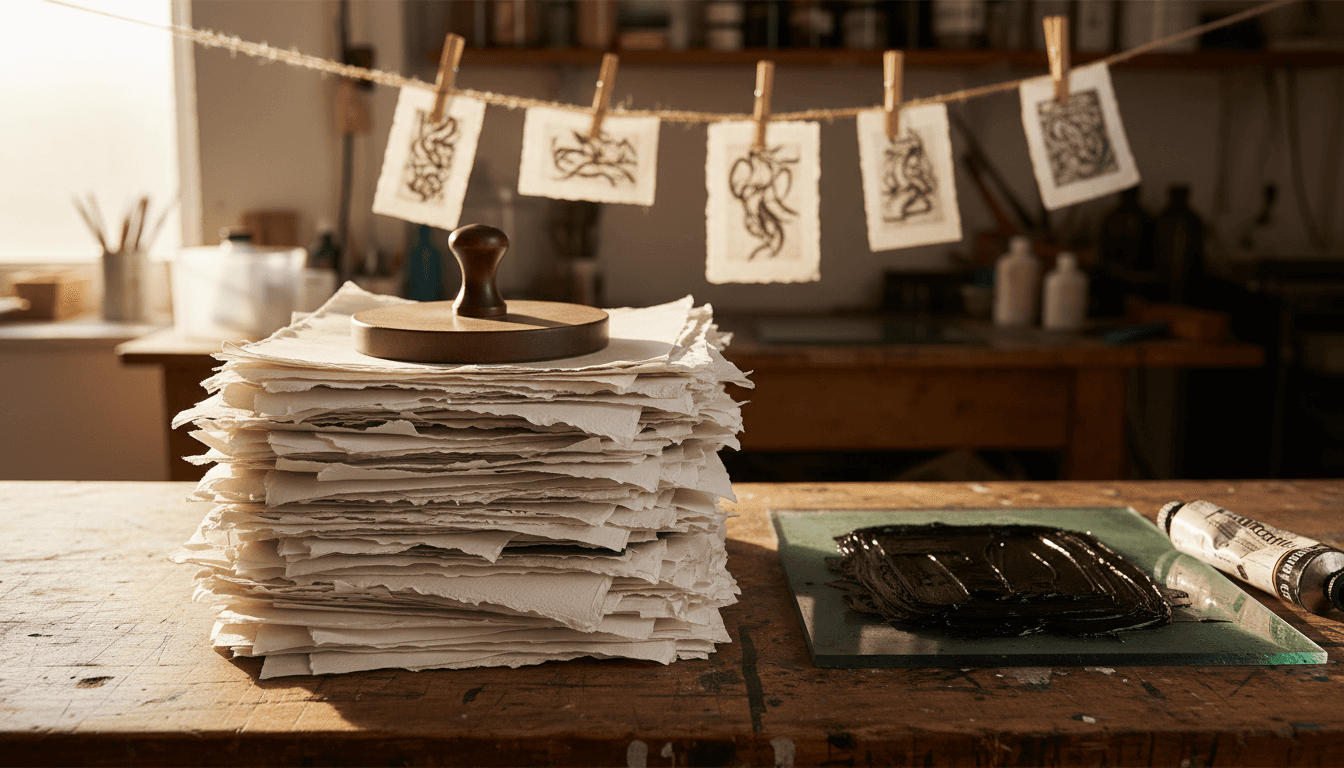
An artist's proof was originally a working document, not a marketing term: a print pulled outside the numbered run so the artist and printer could check that a plate or stone was inking correctly before committing to the full edition. That older, technical meaning still exists, but the label has drifted, and today it's applied loosely enough that "AP" printed under a signature tells you almost nothing about a print's value on its own.
At a glance
| Term | Meaning |
|---|---|
| Edition | The numbered run of prints, e.g. 12/50 |
| Artist's proof (AP) | Prints outside the numbered edition, historically kept by the artist |
| Traditional AP size | Roughly 10% of the edition |
| Modern use | Often just extra prints marketed alongside the edition |
| What actually drives value | Artist, edition size, condition, and whether the print is original or reproduction |
Where the convention came from
Before an edition was printed, the artist and printer needed to check the plate, the ink, and the colour — and the prints made during that checking process were the proofs. Convention allowed the artist to keep a small number of these outside the numbered edition, and because they came from the earliest, often highest-quality pulls of the run, they were considered a modest cut above the rest.
The convention wasn't arbitrary decoration — it reflected an actual division of labour in the print workshop between the artist, the printer, and eventually the publisher, each of whom historically had their own category of proof.
How American print culture standardised the modern rules
Much of today's rigour around editions, documentation, and proof categories in the United States traces back to a specific, deliberate revival. Fine-art lithography in America had drifted toward posters and commercial work by the late 1950s; the painter and printmaker June Wayne, frustrated at having to travel to Europe to find master lithographers to collaborate with, secured Ford Foundation funding and opened the Tamarind Lithography Workshop in Los Angeles in 1960.
Wayne insisted on fine papers, small, honestly documented editions, and rigorous printing standards — treating lithography as fine art rather than commercial reproduction. Tamarind trained a generation of American master printers (the program moved to the University of New Mexico in 1970 as the Tamarind Institute, where it still operates), and its documentation practices — clear edition sizes, properly labelled proof categories, consistent condition records — became close to the industry standard many American workshops still follow.
The vocabulary of proofs, precisely
- Artist's proof (AP). Outside the numbered edition, historically kept by or given to the artist.
- Printer's proof (PP). A separate small allotment kept by the printer as a record of their own work, distinct from the artist's copies.
- Trial proof. Pulled during the development of an image, before the edition is finalised — often unique, and valuable specifically as a record of the working process.
- Bon à tirer (BAT). French for "good to pull": the single impression the artist approves as the standard the rest of the edition must match, usually kept by the printer or publisher as the benchmark.
- Hors commerce (HC). "Not for [commercial] sale" — proofs excluded from the edition and typically kept for the artist's or publisher's own records rather than sold.
Advertisement
Why the modern label is unreliable
None of this vocabulary is legally regulated, and that's the whole problem with treating "AP" as a value signal today. Some publishers still issue a genuine, honest set of artist's proofs alongside a numbered edition; others print extra, unnumbered copies and label them "AP" simply because the term still carries a whiff of exclusivity to buyers who don't know its history. The word hasn't changed — the honesty behind how it's applied has, and it varies by publisher.
What actually determines a print's value
A proof's value rests on exactly the same factors that anchor any broader assessment of a print's worth: the artist's reputation, the total edition size, physical condition, documented provenance, and — critically — whether the print is an original work or a reproduction of something that exists in another medium. Proof status is a secondary modifier on top of those factors, not a replacement for them. A proof of a weak print by an unknown artist is still a weak print; the label doesn't rescue it.
A short buyer's checklist
- Confirm the edition size, and whether the publisher has a track record of honouring it — and whether the edition is limited or open in the first place, since the two carry entirely different value logic.
- Establish whether it's an original print or a reproduction — a reproduction "AP" is still a reproduction.
- Check the signature. A hand signature in pencil is different from one printed in the plate, and it matters more for a recognised artist than an unknown one.
- Ask for documentation. A certificate naming the artist, title, edition size, date, and publisher supports a claim; it's a starting point for verification, not proof on its own.
Lifetime impressions versus posthumous prints
A related distinction that matters just as much as proof status: whether a print was pulled during the artist's lifetime, under their direct supervision, or afterward. An estate print — made after the artist's death, typically from the original plates or blocks under the estate's authority — is a legitimate category, but it isn't the same object as a lifetime impression, and the market generally prices the two differently. A posthumous restrike can dilute an edition's scarcity if it isn't clearly and separately documented as such, which is exactly why the distinction is worth asking about directly rather than assuming.
Basic care, since a print's condition drives its value as much as anything else
Works on paper are vulnerable to light, humidity, and acidity in ways that are easy to ignore until the damage is done and irreversible. Frame with acid-free mats and backing, keep the print itself from touching the glass, and hang it away from direct sunlight and heat sources — UV light fades inks and yellows paper steadily, and there's no way to undo that once it's happened. In storage, flat, cool, dry, and dark beats any alternative, and a print that will hang for years benefits from being rotated out of direct light periodically rather than left in one spot indefinitely.
The bottom line
"Artist's proof" is a genuine historical category that's been loosened by a century of marketing, and both facts are true at once: some APs really are the earliest, most carefully pulled impressions of an edition, and some are simply extra prints wearing a more interesting label. The proof is worth exactly what the underlying print is worth — no more — and the only way to tell the difference is to look past the two letters and check the print itself.
FAQ
What does "AP" mean on a print?
Artist's proof — historically, an impression pulled outside the numbered edition and kept by the artist, though the term is used more loosely today.
Are artist's proofs always more valuable than numbered prints?
Not automatically. Value depends primarily on the artist, edition size, and condition; proof status is a secondary factor that can add value only when the underlying print already has it.
What's the difference between an artist's proof and a printer's proof?
An artist's proof was historically kept by the artist; a printer's proof is a separate, smaller allotment kept by the printer as their own record of the edition.
What is a bon à tirer?
French for "good to pull" — the single reference impression the artist approves as the standard the rest of the edition must match.
How many artist's proofs are typically made?
Traditionally around 10% of the edition size, though modern practice varies by publisher and isn't standardised.